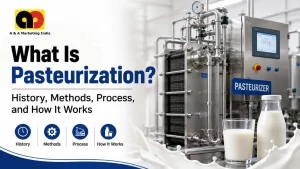
Pasteurization is one of the most important food preservation techniques used worldwide to improve food safety and extend product shelf life. The process involves heating food and beverages to a specific temperature for a predetermined period and then rapidly cooling them. This controlled heat treatment destroys harmful microorganisms while maintaining the nutritional value, taste, and quality of the product.
Pasteurization method widely used in dairy, beverage, pharmaceutical, and food processing industries, to ensure consumer safety and reduce foodborne illnesses. From milk and fruit juices to beer and liquid food products, pasteurization has become a standard process in modern manufacturing facilities.
What is Pasteurization? Definition
Pasteurization is a thermal processing method developed by the French scientist Louis Pasteur in the 19th century. The process is designed to eliminate pathogenic bacteria, yeast, molds, and other microorganisms that may cause spoilage or disease.
Unlike sterilization, pasteurization does not completely destroy all microorganisms. Instead, it significantly reduces microbial load to safe levels while preserving the product’s flavor, texture, and nutritional content.
Objectives of Pasteurization
- Destroy disease-causing microorganisms.
- Extend product shelf life.
- Maintain food quality and taste.
- Reduce spoilage caused by bacteria and fungi.
- Ensure compliance with food safety regulations.
Importance of Pasteurization in Microbiology
Pasteurization is a crucial process in microbiology that helps control and reduce the presence of harmful microorganisms in food, beverages, and other biological products. In microbiology, pasteurization is important because it significantly lowers the microbial load without completely sterilizing the product. This helps maintain the nutritional value, taste, and quality of food while ensuring consumer safety. The process is particularly effective against harmful microorganisms such as Salmonella, Listeria monocytogenes, and Escherichia coli (E. coli), which are commonly associated with foodborne illnesses.
Types of Pasteurization
Several pasteurization methods are used based on product characteristics and industrial requirements.
1. Low-Temperature Long-Time (LTLT): Also known as batch pasteurization, this method heats the product at a relatively low temperature for an extended period.
Typical Conditions
- Temperature: 63°C
- Time: 30 minutes
2. High-Temperature Short-Time (HTST): HTST is the most common pasteurization method used in commercial milk processing.
Typical Conditions
- Temperature: 72°C
- Time: 15 seconds
3. Ultra-High Temperature (UHT): UHT processing involves heating products to extremely high temperatures for a very short duration.
Typical Conditions
- Temperature: 135°C to 150°C
- Time: 2 to 5 seconds
4. Flash Pasteurization: Flash pasteurization uses rapid heating and cooling cycles to preserve product quality while ensuring safety.
Importance of Pasteurization in the Food and Beverage Industry
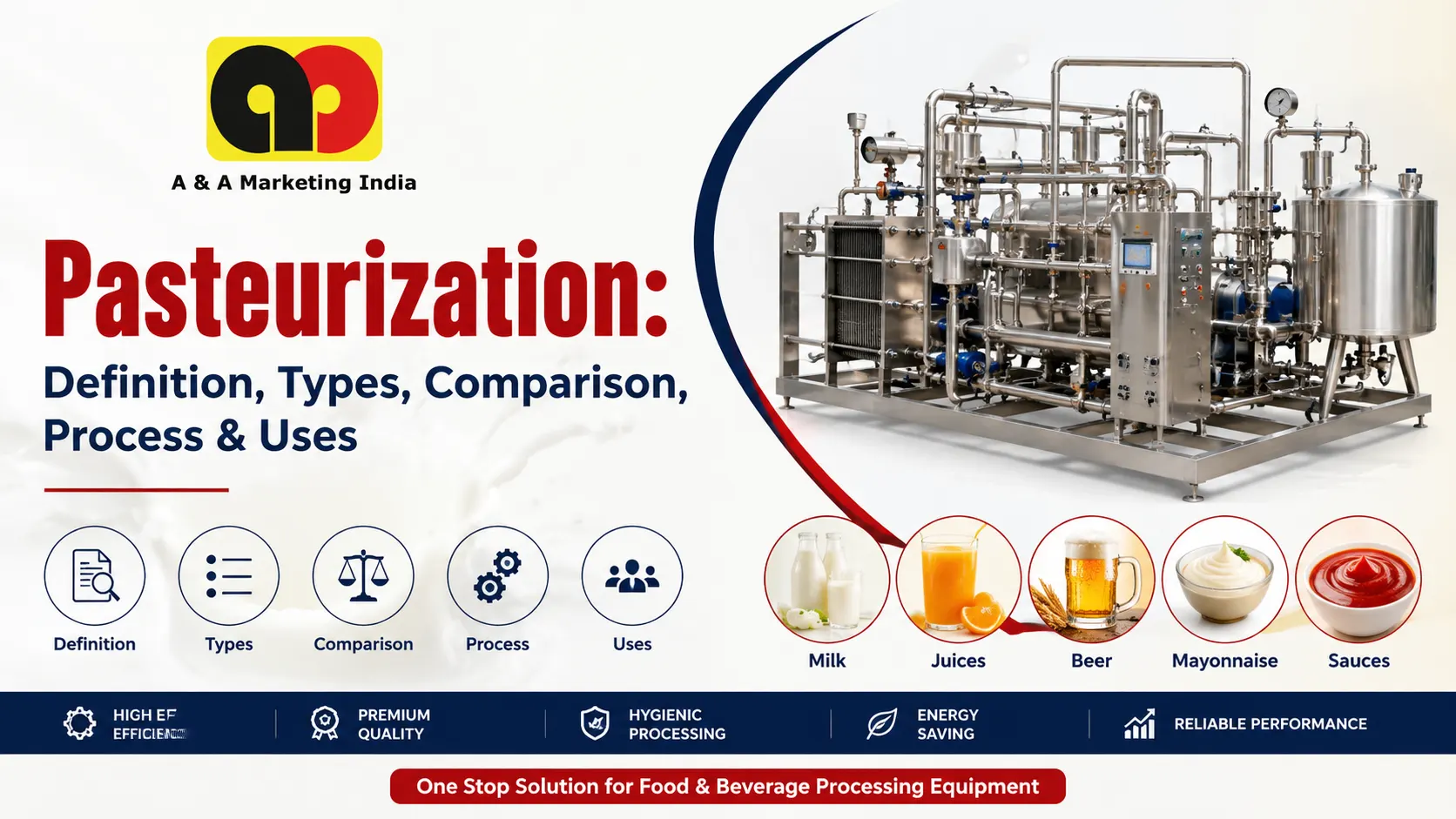
Pasteurization is a vital process in the food and beverage industry that helps eliminate harmful microorganisms, ensuring product safety and extending shelf life. It preserves the taste, nutritional value, and quality of products such as milk, fruit juices, sauces, beverages, and mayonnaise. By reducing microbial contamination, pasteurization helps prevent spoilage and foodborne illnesses while meeting food safety standards.
For efficient and reliable pasteurization solutions, AA Marketing is a trusted manufacturer of high-quality Pasteurization Machines designed for food processing industries. The company also manufactures advanced Mayonnaise Making Machines that enable hygienic, consistent, and large-scale production of mayonnaise, sauces, dressings, and emulsified food products.
Conclusion
Modern industries are increasingly adopting automated pasteurization systems integrated with smart controls and monitoring technologies. By carefully heating products to controlled temperatures, the process destroys harmful microorganisms while preserving nutritional value, taste, and quality. AA Marketing provides highly efficient and advanced machinery for food and beverage industry applications, ensuring reliable performance, hygienic processing, improved product quality, and enhanced production efficiency.